
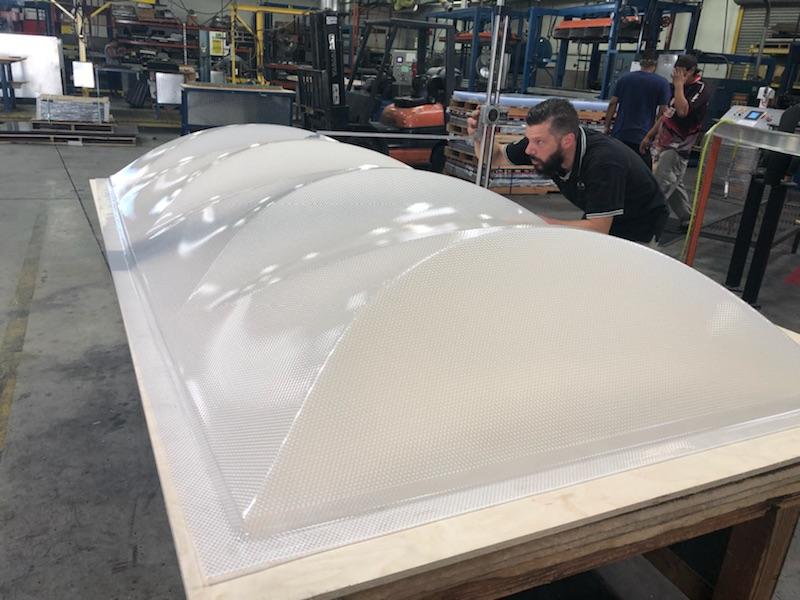
What Is Vacuum Forming?
Vacuum forming is a streamlined thermoforming process where heated plastic sheets are shaped over a mold using vacuum pressure. As the plastic cools, it retains the mold’s shape, creating durable, lightweight parts with consistent detail. This method is widely used for custom fabrication projects that require efficiency, repeatability, and design flexibility.
How the Vacuum Forming Process Works
The process begins by heating a thermoplastic sheet until it becomes pliable. The softened sheet is then placed over a precision mold. Vacuum pressure pulls the material tightly against the mold surface, capturing details and contours. Once cooled, the formed part is trimmed to final specifications. Advanced trimming methods help ensure accuracy and consistency at scale.
Common Uses Across Industries
Vacuum forming supports a broad range of applications across multiple industries. Automotive components, transportation panels, architectural features, and industrial housings are common examples. The process is especially valuable for large-format parts and low-to-medium production runs where injection molding would be cost-prohibitive. Custom molds also allow manufacturers to iterate quickly during product development.
Key Benefits of Vacuum Forming
One of the biggest advantages of vacuum forming is cost efficiency. Tooling costs are generally lower than other molding methods, making it ideal for prototypes and short production cycles. The process also enables faster turnaround times and supports a wide range of materials, finishes, and thicknesses. Additionally, vacuum forming produces lightweight parts without sacrificing strength or durability.
Best Practices for High-Quality Results
Successful vacuum forming starts with thoughtful design. Proper draft angles, uniform wall thickness, and material selection all influence the final outcome. High-quality molds and controlled heating are essential to avoid defects such as thinning or webbing. Post-forming trimming and finishing should be performed with precision equipment to maintain tight tolerances and clean edges.
When to Choose Vacuum Forming
Vacuum forming is a smart choice for projects requiring custom shapes, large components, or quick production timelines. It works well for both prototyping and scaled manufacturing, especially when design changes are expected. Businesses looking for a balance of quality, speed, and cost control often rely on vacuum forming to bring products to market efficiently.
Partnering with the Right Fabrication Team
Working with an experienced fabrication partner ensures proper material selection, mold design, and finishing techniques. Professional teams help guide projects from concept to production, minimizing delays and maximizing performance. Start a conversation about your project needs.